

Driving Licence Photo ID Over 18: Can a UK Photocard Prove Your Age? (2026)
A source-backed UK guide to using a driving licence as photo ID over 18. Learn when a photocard usually works, what staff actually check, when a PASS card may be better, and when you need to update the photo on your licence.
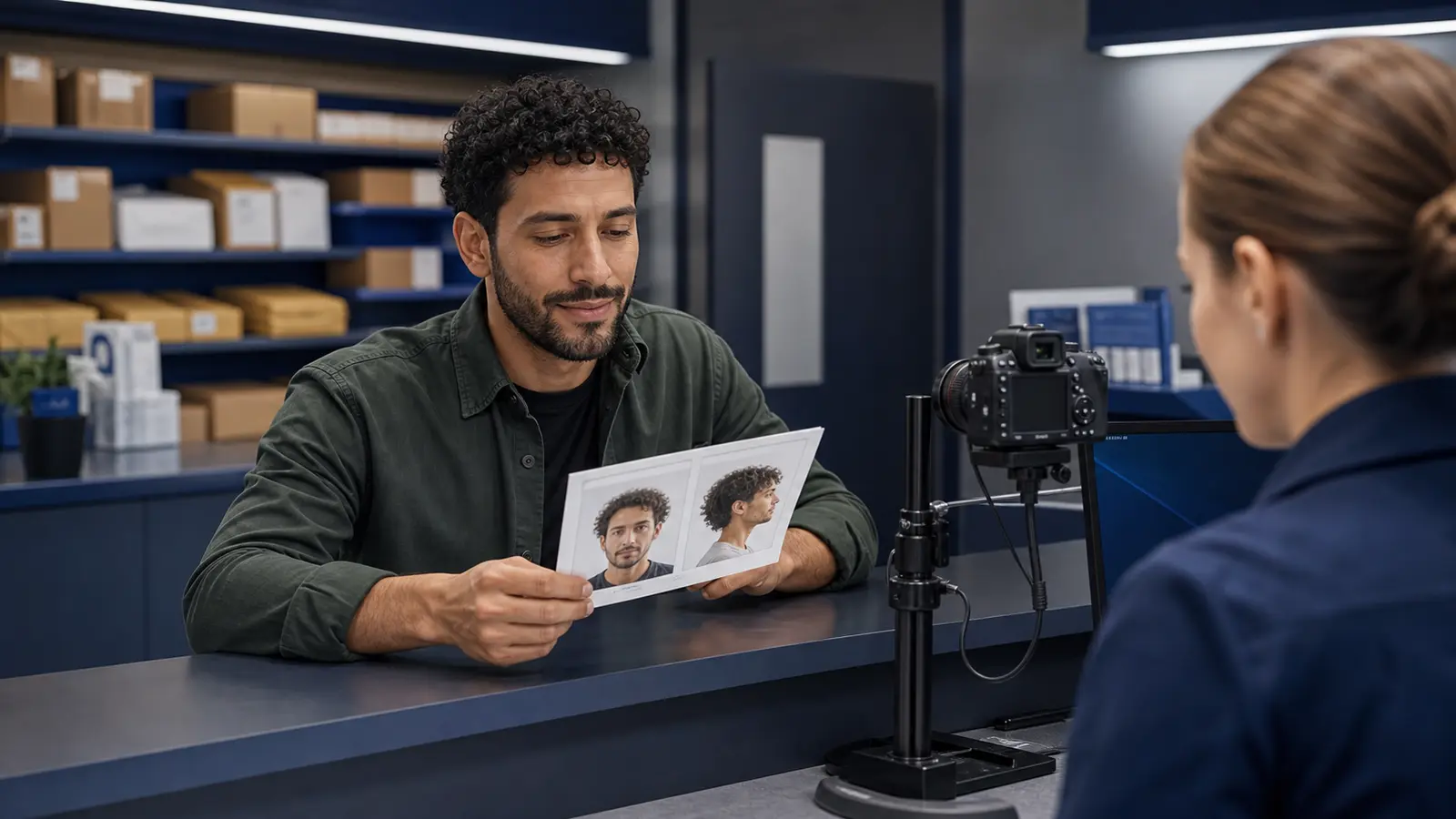
If you are searching for “driving licence photo ID over 18”, the real question is usually this
In UK search behaviour, phrases like driving licence photo ID over 18, photo ID for over 18, or even the messier driving license photo of ID over 18 usually point to the same intent: “Can I use my driving licence to prove my age?” That is a different question from “How do I take a driving licence photo?” and different again from “What counts as identity evidence for a formal application?” This page is about the first question. It explains when a UK photocard driving licence commonly works as proof that you are over 18, what staff are actually checking when they ask for ID, why a licence is not automatically the best document to carry, and when the photo on the card itself can become the reason you get challenged.
The short answer is that a current photocard driving licence is commonly accepted as over-18 photo ID in UK age-verification settings because the standard policy is looking for identification that carries a photograph, date of birth, and a holographic mark. GOV.UK’s published guidance on age-verification policies for licensed premises says examples of acceptable ID include photo card driving licences, passports, or proof of age cards bearing the PASS hologram. That is why a photocard licence shows up so often at the door of a pub, bar, festival, supermarket, or off-licence. The important nuance is that the policy is about the features on the ID, not about the fact that the document says “driving licence.”
That nuance matters because a driving licence does not prove you are over 18 simply by existing. The person checking it is looking at the card because it has a face, a date of birth, and security features. They still need to compare your face with the photograph, read the date correctly, and decide that the card looks current and genuine. This is also why the photo side of the problem belongs on Passlens. If you are only carrying an already-issued licence, the job is interpretation: does the card still work as reliable over-18 photo ID? If you are changing the photo on the licence, applying for a first photocard, or replacing an old paper licence, the job becomes a document-photo workflow where the picture itself can make the difference between a smooth check and friction at the counter.
What “over 18 photo ID” actually means in practice
People often use the phrase photo ID over 18 as if it were one official category. In practice, there are three related but different jobs. First, there is proof of age: you need to show that you are old enough to buy alcohol or enter an age-restricted venue. Second, there is proof of identity: a service wants a document that links your face and name to an official issuer. Third, there is the document-photo workflow: you are applying for or renewing the document itself, which means the image on the card has to satisfy the issuing authority. One photocard driving licence can sit across all three situations, but the acceptance rules are not identical.
| Question you actually mean | Short answer | Why it matters |
|---|---|---|
| Can a UK photocard driving licence prove I am over 18? | Often yes | Licensed-premises age-verification policies commonly accept photocard driving licences because they carry a photo, date of birth, and holographic/security features. |
| Does having a driving licence automatically mean I am 18 or older? | No | Staff still have to read the date of birth. The card is an accepted format, not a magic age certificate. |
| Is a paper licence the same as a photocard for over-18 checks? | No | The policy language focuses on photo-bearing identification. A paper-only licence is a different and weaker position. |
| Does a venue have to accept my photocard just because it is common ID? | No | Premises and staff still have discretion if they think the card is damaged, expired, mismatched, or simply not convincing enough. |
| If I need a new picture on the licence, do photo rules matter? | Absolutely | Once you are changing or renewing the document, the quality and format of the licence photo become part of the compliance task. |
This distinction is the reason the keyword is worth a dedicated page instead of being stuffed awkwardly into a generic driving-licence guide. Someone searching for driving licence photo ID over 18 is usually not looking for country-by-country photo sizes. They are trying to understand whether a UK photocard is acceptable as age-verification ID today, whether a provisional or expired card still works, and whether it is safer to carry something else. Once that question is answered, the next useful move is often one of two paths: either keep using the current card if it is valid and clearly resembles you, or move into the licence-photo workflow if the image is outdated and you want a better long-term ID document.
Why a photocard driving licence usually works as over-18 photo ID
The strongest starting point here is not marketing copy from a retailer or a vague forum answer. It is the UK government’s published age-verification guidance for licensed premises in England and Wales. GOV.UK explains that an age-verification policy must require anyone who appears to be under 18 to produce identification bearing their photograph, date of birth, and a holographic mark. It then gives concrete examples of acceptable ID: photo card driving licences, passports, or proof of age cards bearing the PASS hologram. That language is useful because it tells you what staff have been trained to look for. A photocard driving licence fits the model cleanly, which is why it is widely used as over-18 photo ID.
The same government guidance also says that Challenge 21 and Challenge 25 schemes sit on top of that minimum. In other words, the legal floor is still “under 18,” but many venues deliberately ask anyone who looks under 21 or under 25 to show ID. That does not mean they are changing what counts as acceptable ID. It means they are changing when they ask for it. A valid photocard driving licence is still a common document in that workflow because it gives them the three things the policy is built around: a face they can compare with the customer, a date of birth they can read, and security features that make the card harder to fake than a plain photocopy or a generic student card.
This is also the right place to kill one lazy assumption. People sometimes say “A driving licence works because you have to be 18 to have one.” That is not a safe explanation. GOV.UK states that you can apply for a provisional driving licence when you are 15 years and 9 months. So the reason a photocard licence works is not that every holder is automatically over 18. The reason it works is that staff are checking the date of birth on a document format they recognise. If you are under 18 with a provisional licence, the same card format exists, but the date of birth check will fail the age test. That is why “the document is accepted” and “the person is old enough” are two separate parts of the decision.
What staff, retailers, and door teams are actually checking
Once you understand that a photocard works because of its features, the real-world check becomes clearer. The member of staff is not simply asking “Is this a driving licence?” They are usually checking five things at once. First, does the card carry a recognisable photograph? Second, does the person in front of them look like that photograph today? Third, does the date of birth show the customer is old enough? Fourth, do the hologram and physical security cues look convincing? Fifth, is the card still current enough and in good enough condition that relying on it feels reasonable?
- The date of birth matters just as much as the fact that it is a licence.
- The photo likeness matters more than many users expect. A very old or poor likeness creates hesitation even if the card itself is genuine.
- The security features matter because the policy expects a holographic mark or equivalent anti-fraud cues.
- The physical condition matters. A cracked, badly worn, delaminating, or altered card invites scrutiny.
- The original document matters. A screenshot or blurry phone photo of a licence is not the same as producing the card itself unless the service explicitly says digital copies are accepted.
This is where many people misread the situation. They assume rejection means “the venue does not accept driving licences.” In reality, rejection often means “the venue accepts driving licences, but not this licence in this state with this level of confidence.” That is exactly why the photo on the card matters. A photocard is a face-based proof. If the face is old, unclear, or badly lit, staff are being asked to take more risk than they want to take in a quick age check. The keyword may sound like a pure ID question, but the photo quality and likeness are central to the outcome.
When a PASS card may be better than carrying your licence or passport
If your goal is simply to prove you are over 18 on a night out, a PASS card is often the more practical document to carry. PASS exists precisely to provide a recognised proof-of-age card with a standard hologram and anti-fraud checks. The PASS retailer and publican information pack lists acceptable forms of ID as cards bearing the PASS hologram, a photocard driving licence, a passport, and military ID. PASS also makes an argument that many users overlook: if all you need is proof of age, carrying a lower-risk purpose-built card can be smarter than carrying a passport or the driving licence you rely on every day.
| Document | Where it is strong | Main drawback |
|---|---|---|
| UK photocard driving licence | Commonly recognised over-18 and general photo-ID document | More painful to lose than a dedicated proof-of-age card, and the photo/date/condition still get checked closely |
| Passport | Very strong identity document and widely recognised | Bulky, high-value, and often the worst document to risk losing on a routine night out |
| PASS card | Built specifically for proof-of-age use and widely recognised through the PASS hologram | Not a universal substitute for every identity workflow outside proof-of-age settings |
There is another important nuance here: PASS explains that having a PASS card does not give you an automatic right to buy alcohol, enter a venue, or be served. That same practical reality applies to a driving licence too. The card makes it easier for staff to say yes; it does not remove their judgement. So the best way to think about the choice is not “Which card forces acceptance?” but “Which card gives me the cleanest, lowest-friction proof for the situation I am actually in?” If you want one document that often doubles as general photo ID, the licence is stronger. If you want a purpose-built over-18 card so you are not handing over your passport or licence every weekend, a PASS card is often the smarter carry.
When a driving licence stops working well as over-18 photo ID
A photocard can be an accepted document format and still be a bad practical piece of ID. The first failure mode is the most obvious: the photo no longer looks enough like you. That does not mean you need to panic every time your hairstyle changes, but it does mean there is a threshold where staff stop feeling confident. Weight change, facial hair change, ageing, surgery, and old low-quality photos all push the check in the wrong direction. The stricter the venue or the busier the queue, the less appetite there is for a card that only kind of resembles the person holding it.
The second failure mode is validity. GOV.UK’s identity-proofing guidance is explicit that a UK driving licence is not valid for any purpose after it has expired. That matters because many users assume an expired photocard still works informally at the bar as long as the date of birth is readable. Government guidance points the other way. If the licence is expired, you are outside the safe zone. Even before expiry, a badly damaged card can be enough to derail the check. Delamination, worn print, glare, peeled edges, or a cracked laminate window are all reasons a staff member may hesitate or refuse.
The third failure mode is simply using the wrong version of the document. A paper licence is not the same proposition as a photocard because the age-verification logic is built around a face-bearing document. Likewise, a phone gallery picture of your licence is not the same as the original photocard unless the venue or service explicitly says it accepts digital presentation. Some government and DBS identity flows now talk about digital PASS cards with QR verification or other controlled routes, but that is not the same as assuming a screenshot of a physical licence will be treated as original ID.
Practical rule
If the card is expired, badly worn, or no longer a clear likeness, stop thinking of it as dependable over-18 photo ID. At that point the question is no longer “Is a driving licence an acceptable document type?” It is “Is my current licence still a convincing example of that document type?”
If you need a new photo on the licence, the photo workflow becomes the real issue
Once you move from “Can I use my current licence?” to “I need to update the photo on my licence,” you are no longer in the proof-of-age lane. You are back in a document-photo workflow, and the details matter again. In Great Britain, GOV.UK says you can change the photo on your driving licence online and that you will be able to use your passport photo or upload a new one. If you apply by post, the service says you must include a recent printed passport-type photo. GOV.UK also notes that a photocard driving licence must normally be renewed every 10 years, which is part of keeping the photograph up to date.
Northern Ireland guidance is even more explicit about the picture itself. nidirect says printed photos posted with a licence application must be in colour, taken within the last month, against a light grey or cream background, and sized at 45 mm high by 35 mm wide. It also gives the usual face-quality rules: clear focus, no red-eye, no shadows, no glasses glare, neutral expression, and no damage to the printed photo. That is the point where a generic “photo ID over 18” answer stops being useful. If your card is not doing the job anymore, the next step is not another over-18 explainer. It is the exact licence-photo guide for the authority that will issue the replacement.
That is the main connection back to Passlens. If your goal is simply to know whether your current photocard usually works as over-18 ID, this page answers that. If your goal is to produce a fresh picture for DVLA or a Northern Ireland application, you should move immediately to the UK driving licence photo guide and then to the live preset. The user value is in separating those two jobs cleanly instead of blending them together under one fuzzy search term.
Common mistakes people make with over-18 driving-licence ID
- Assuming a driving licence proves you are over 18 without anyone checking the date of birth.
- Treating a paper licence as equivalent to a current photocard for quick proof-of-age checks.
- Continuing to carry an expired photocard because the face and birth date are still visible.
- Using a licence photo that is such an old likeness that staff hesitate even though the card is genuine.
- Carrying a passport or licence as routine nightlife proof-of-age when a PASS card would reduce the downside of loss or theft.
- Jumping straight from “Will my licence work as ID?” to a generic passport-photo crop instead of checking the actual DVLA or DVA photo workflow.
All of those mistakes come from mixing document acceptance and document creation into one blob. Acceptance questions are about whether the current card still does its job. Creation questions are about making the next card photograph correctly. Keep those separate and the whole topic becomes much easier to navigate.
Best next step based on your situation
| Your situation | Best next move |
|---|---|
| You already have a current UK photocard and only want proof-of-age guidance | Carry the photocard if it is valid, undamaged, and a strong likeness; consider a PASS card if you want a lower-risk proof-of-age document. |
| Your licence photo is old, weak, or likely to cause hesitation | Treat this as a renewal/photo-update problem and move to the UK driving licence photo guide. |
| You only have a paper licence or an expired photocard | Do not rely on it as dependable over-18 photo ID. Move to the correct renewal or replacement route first. |
| You are not asking about bars or age checks at all, but about broad official photo-ID categories | Read the government-issued photo ID guide and the photo ID requirements guide to separate document classes before editing a picture. |
Official sources and supporting references
- GOV.UK — New conditions for licensed premises in England and Wales: age verification and smaller measures
- PASS — Info pack for retailers and publicans
- PASS 1:2022 — Requirements for identity and age verification
- GOV.UK — Driving lessons and learning to drive
- GOV.UK — How to prove and verify someone's identity
- GOV.UK — Change the photo on your driving licence
- GOV.UK — Exchange your paper driving licence for a photocard licence
- nidirect — The photo for your driving licence