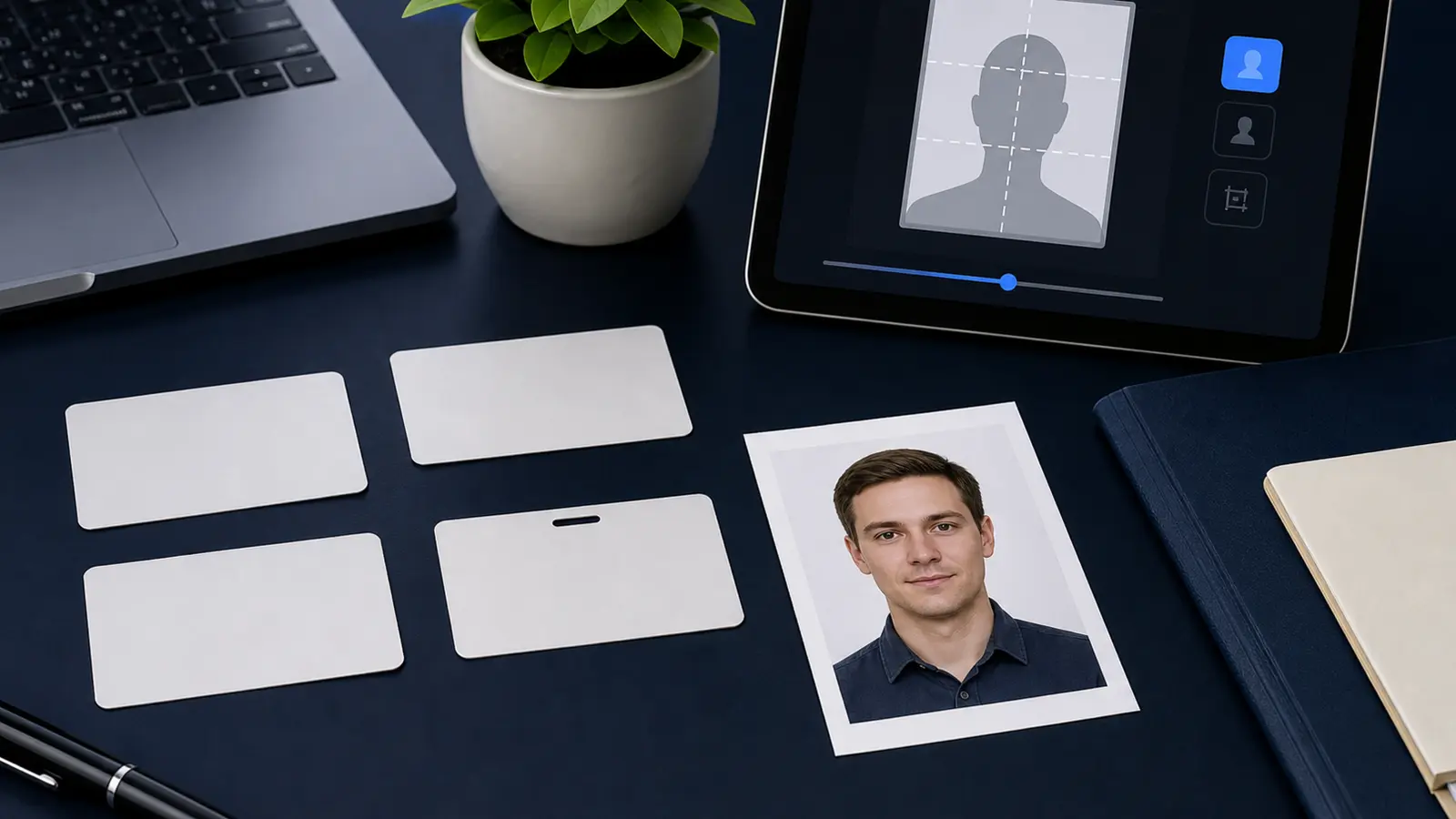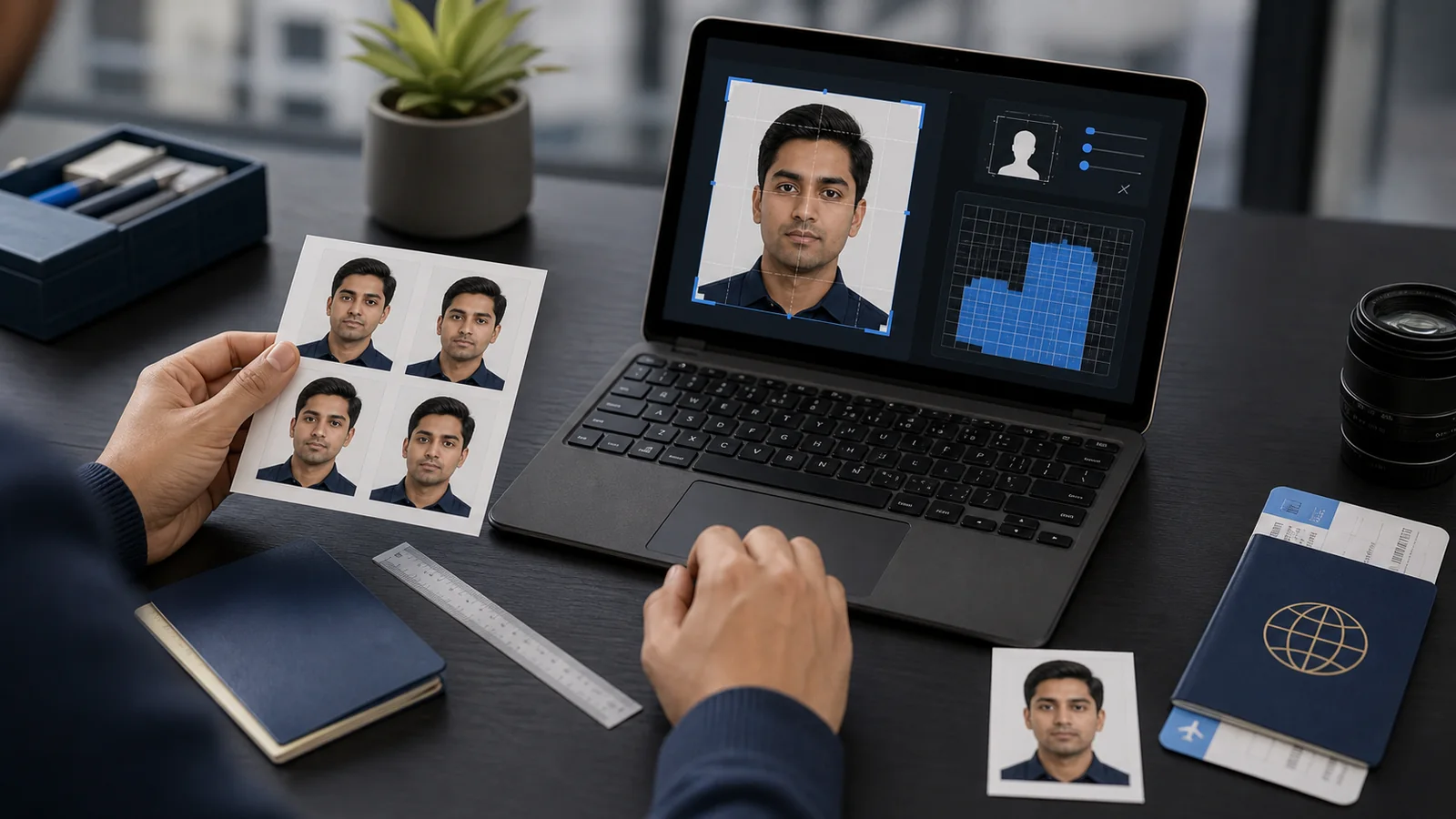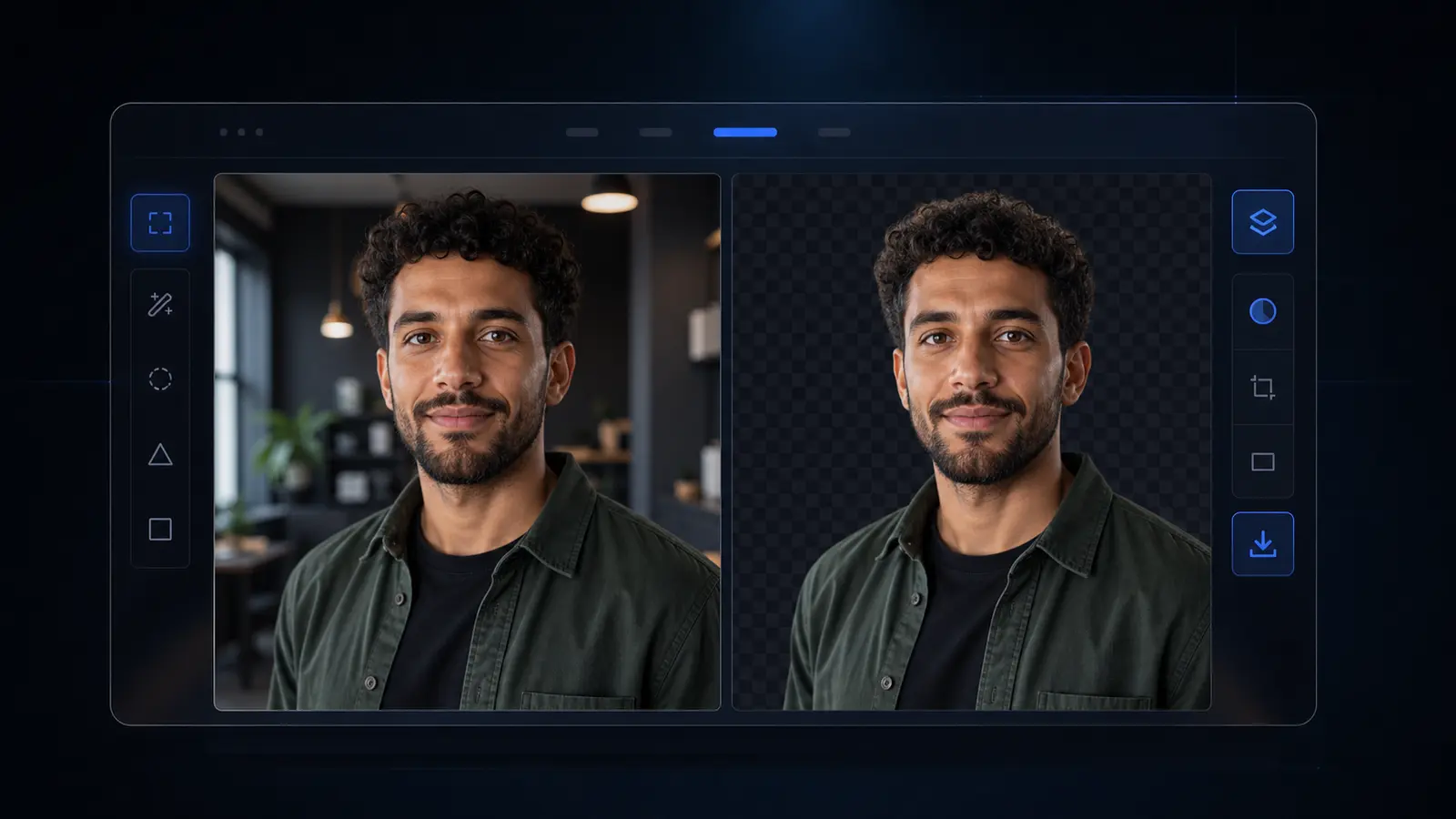

Japanese Passport Photo Requirements 2026: Japan 35 x 45 mm MOFA Size, Upload Rules, and Free Maker
Japanese passport photo requirements for 2026: Japan 35 x 45 mm size, 32-36 mm head height, MOFA-recommended white background, upload limits, and free maker workflow.
Fast answer: Japanese passport photo requirements
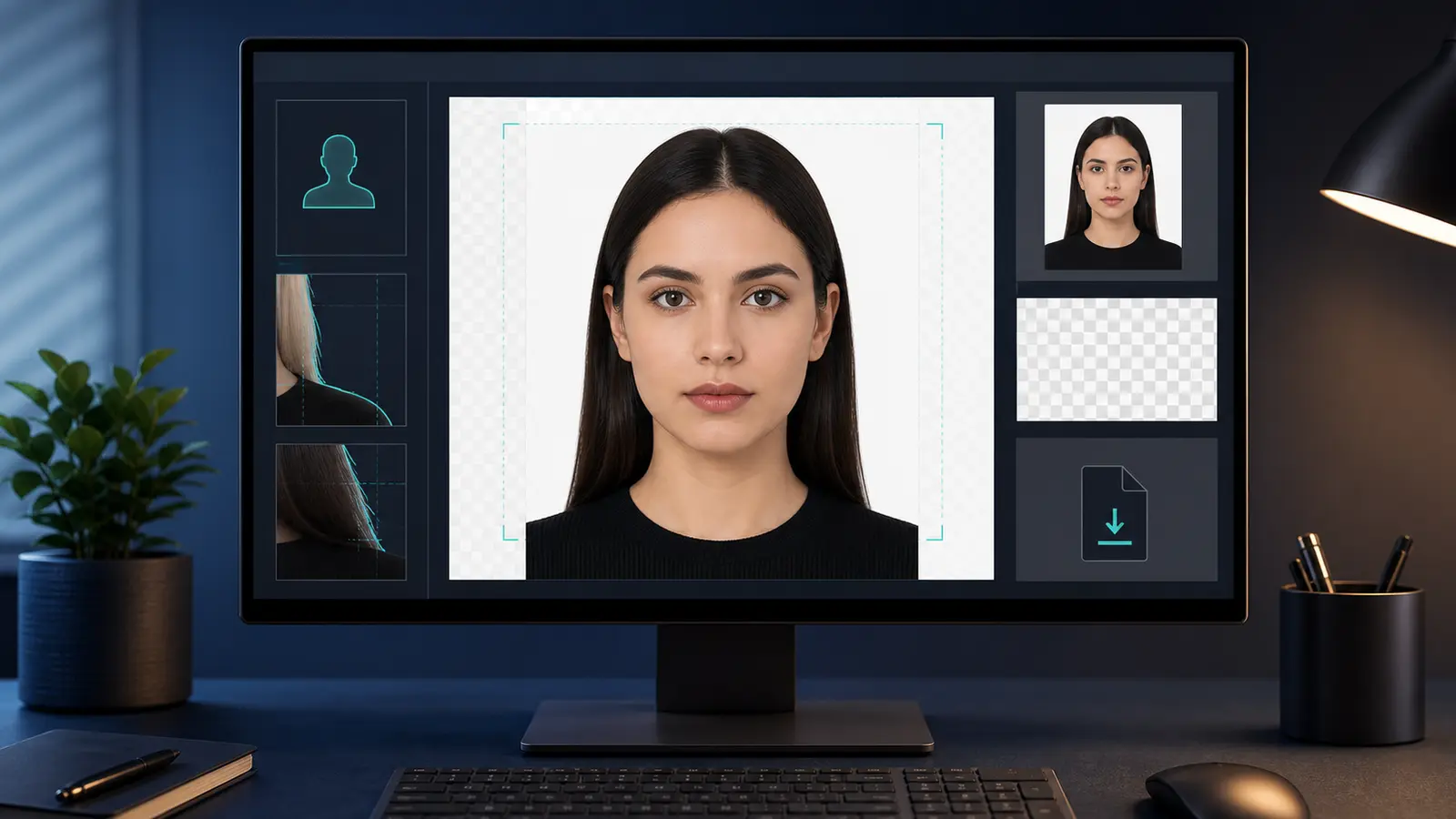
A Japanese passport photo is 35 x 45 mm, borderless, and taken within the last 6 months. MOFA lists the head height as 34 mm plus or minus 2 mm, so the practical range is 32 mm to 36 mm. Use a plain, shadow-free background; MOFA recommends white for application-document photos.
If your search says Japanese passport photo, Japan passport photo requirements, or Japanese passport photo size, this is the passport route. If you are ready to make it now, open the Japan passport preset in Passlens, check the 32 mm to 36 mm head-height range, keep a plain light background, and then compare the export with the upload rules below.
Japanese passport photos follow standards published by the Ministry of Foreign Affairs (MOFA) of Japan. The first check is not complicated: use the Japan passport frame, keep the face inside the Japanese measurement guide, and avoid a background or face-position problem that would force a retake.
This guide is written for Japanese passport applications, renewals, and online photo uploads. Visa forms are separate: many Japan visa checklists ask for a 45 x 35 mm photo, so check the Japan visa guide before reusing a passport crop.
Japanese passport photo 35 x 45 mm MOFA size
Quick answers for Japanese passport photo searches start with the same first question: does the file match the MOFA passport frame before it is printed or uploaded? That is true whether the search says Japanese passport photo, Japan passport photo requirements, or Japanese passport photo size.
| Question | Short answer |
|---|---|
| Japan passport photo size | 35 mm wide x 45 mm high, borderless. Do not upload a 2 x 2 inch US passport photo for a Japan passport. |
| Japanese passport photo head size | MOFA describes the head height as 34 mm plus or minus 2 mm from crown to chin. |
| Japan passport photo background | Use a plain light background with no shadow. MOFA’s application-document page recommends white. |
| How recent should it be? | The photo should be taken within 6 months before the application date. |
| Is a Japan visa photo the same? | Japan visa photos often use a different 45 x 35 mm checklist, so use the visa guide if the photo is for a visa form. |
| Can I make it online? | Yes. Use the Japan preset in Passlens, check head size and background, then export a measured print or digital file. |
If your query is really about Japan visa photo requirements, Japan visa photo size, or a Japanese embassy checklist, use the Japan visa photo guide instead. Passport and visa photos are easy to mix up because the numbers are similar, but the document route is different.
Official Specifications
| Requirement | Value |
|---|---|
| Document | Passport |
| Size | 35 × 45 mm |
| Background | Light / neutral |
| Head height | 32–36 mm |
The standard Japanese passport photo measures 35 mm wide by 45 mm tall. The photo must be borderless, taken within the last 6 months, and must match the applicant’s current appearance.
MOFA specifies precise positioning: the head height from chin to crown is 34 mm plus or minus 2 mm, which means roughly 32 mm to 36 mm. The face must be positioned in the centre of the photo. The distance from the top of the photo to the top of the head should be kept inside the official measurement frame.
| Specification | Requirement |
|---|---|
| Photo dimensions | 35 mm x 45 mm |
| Head height (chin to crown) | 32–36 mm |
| Top margin (photo edge to head top) | 2–6 mm |
| Background | Plain, light colour (white, light grey, or light blue) |
| Recency | Taken within last 6 months |
| Print quality | High resolution, no visible grain |
For related size checks, compare this page with the 35 x 45 mm photo size guide and the passport photo size in pixels guide. Japan shares the 35 x 45 mm outer size with several countries, but the Japanese head-position frame and online-upload limits still matter.
Background Requirements
The background must be plain and uniform in a light colour. MOFA accepts white, light grey, and light blue backgrounds. Patterned, textured, or gradient backgrounds are not permitted.
There must be no shadows on the background. The Japanese passport office is particularly strict about this: even faint shadows near the shoulders or behind the head will lead to rejection.
- Acceptable colours: white, light grey, light blue
- No patterns, gradients, or textures
- No shadows anywhere on the background
- No other objects or people visible in the background
- Sufficient contrast between the subject and the background
Japanese Photo Booths
Photo booths in Japan are common at train stations and convenience stores, but you still need to choose the passport-photo setting and check the print size before submitting. If you take the photo yourself, use the passport photo background rules guide to avoid shadow and contrast problems.
Clothing and Appearance
The applicant must face the camera directly with a neutral expression. The mouth must be closed, and both eyes must be fully open and clearly visible. The face must be evenly lit with no harsh shadows.
Glasses
As of 2024, MOFA recommends removing glasses for passport photos. While not an absolute ban, photos with glasses are more likely to be rejected due to reflections, frame shadows, or the frames obscuring part of the eyes. If you must wear glasses, ensure there is no glare on the lenses and the frames do not cover any part of the eyes or eyebrows.
Head Coverings and Hair
Head coverings are not permitted unless worn daily for religious reasons. Hair must not cover the face, eyes, or eyebrows. The hairline and ears should ideally be visible, though this is not a strict requirement as long as the full face is clearly shown.
Clothing
There are no strict rules about clothing colour, but it is recommended to wear clothing that contrasts with the background. Avoid white or very light clothing if using a white background, as it may blend in. Uniforms and costumes are not recommended.
Free Japan passport photo maker
Use Passlens as a free Japan passport photo maker when you need the 35 x 45 mm crop, a measured head-size check, and a print or upload export. The app keeps the editing workflow in the browser by default, so the photo does not need to be sent away just to crop it.
- Open Passlens and select the Japan Passport preset.
- Take a new photo or upload one from your gallery. Ensure even lighting and face the camera directly.
- Check the 35 x 45 mm crop and keep the head height within the 32–36 mm range.
- Use the passport photo checker before export if you need one more review of head size, background, and print scale.
- Export a digital file for an online route or use passport photo print layouts for a measured sheet. Print at 100% scale.
Online application face-photo checks
MOFA describes online new and renewal applications as available through all prefectures and overseas missions, but the photo-file rules differ by route. Check the page for the office where you will submit, especially if you are applying from outside Japan.
| Route | Photo-file check |
|---|---|
| Inside Japan | MOFA notes that domestic online uploads use JPG up to 600 KB. |
| Outside Japan | MOFA notes that overseas online uploads can use JPG, JPEG, BMP, or PNG from 20 KB to 2 MB. |
| Printed application | Use a borderless 35 x 45 mm photo taken within 6 months and printed at the real size. |
If you are preparing a file rather than a print, keep the Japanese passport crop and then review the export in the passport photo for online applications guide. Resizing a US 2 x 2 inch image into a square upload is the wrong path for a Japan passport.
Where to Submit
Japanese passport applications are processed through prefectural passport centres and select municipal offices across Japan.
Within Japan
Apply through your local prefectural passport centre or the online route available for your prefecture. MOFA says domestic processing is normally about 2 weeks, so do not treat the photo as a last-minute task. You will need your photo, completed application form or online application route, family register where required, and identification.
Outside Japan
Japanese citizens abroad should apply at their nearest Japanese Embassy or Consulate General. Overseas processing typically takes 1 to 2 weeks but can be longer depending on location. Some consulates accept applications by mail for renewals.
MOFA now describes online new and renewal applications as available through all prefectures and overseas missions, but the exact route still depends on whether you are applying inside Japan or through a Japanese embassy or consulate. Online applicants should check the separate face-photo upload rules before exporting the file.
Common Mistakes
Japanese passport offices have a reputation for being meticulous. Here are the most common rejection reasons:
- Head tilt: Even a very slight tilt of the head to one side will be rejected. The face must be perfectly straight and centred.
- Incorrect head size: The 32–36 mm range is strictly enforced. Photos where the head is even 1 mm outside this range are rejected.
- Background shadows: Shadows behind the head or near the shoulders are one of the top reasons for rejection in Japan.
- Hair covering eyes or eyebrows: Bangs (fringe) that partially cover the eyes or eyebrows are not acceptable.
- Glare on glasses: Reflections on eyeglass lenses are extremely common in home-taken photos and almost always result in rejection.
- Mouth slightly open: The mouth must be fully closed. Even a parted-lips expression is not accepted.
- Photo printed at wrong size: Printing at home can lead to scaling errors. Always verify the printed dimensions with a ruler.
- Wrong online file: Domestic and overseas online routes use different file checks. Do not assume a photo that uploads to one office will match another office’s file rules.
Frequently Asked Questions
Can I use a photo booth (shashin-ki) photo for my Japanese passport?
Yes, if the booth is set to the Japanese passport-photo format and the print is the real 35 x 45 mm size. Check the final sheet with a ruler before submitting.
Is a white background acceptable for a Japanese passport photo?
Yes. White, light grey, and light blue are all accepted background colours. White is the most commonly used. Just ensure there is adequate contrast between the background and your skin and hair.
Can I wear coloured contact lenses in my Japanese passport photo?
No. Coloured contact lenses, patterned lenses, and circle lenses that alter the natural appearance of your eyes are not permitted. Clear corrective contact lenses are fine.
Do I need to show my ears in a Japanese passport photo?
It is not strictly required to show your ears, but the full face including the hairline and jawline must be visible. If long hair covers the sides of your face, you may be asked to pull it back. Having the ears visible generally reduces the risk of rejection.
Can I use a Japan passport photo for a Japan visa?
Do not assume that. Japan passport photos use a 35 x 45 mm frame, while many Japan visa checklists ask for 45 x 35 mm. If the application is for a visa, start with the Japan visa photo guide.