
Philippines Passport Photo Requirements 2026: DFA 35x45 mm Size, Bangs, Dress Code, and On-Site Capture Rules
Complete guide to Philippines passport photo size and DFA rules, including the 35x45 mm format, white background guidance, bangs, dress code, and what to expect from on-site DFA photo capture.
Overview
Philippine passport photos must meet the biometric standards set by the Department of Foreign Affairs (DFA). The Philippines issues electronic passports (ePassports) that comply with ICAO standards, and photo requirements are strictly enforced during the application process.
You will need a compliant photo when applying for a new Philippine passport, renewing your passport, or replacing a lost or damaged passport. Philippine passports are valid for 10 years for adults aged 18 and over, and 5 years for minors under 18.
An important note for Philippine passport applications: the DFA typically captures your photo on-site during your appointment at DFA offices. However, knowing the photo specifications is still essential because you need to present yourself in a way that will produce a compliant photo, and you may need photos for other Philippine documents like visa applications, NBI clearance, and overseas worker (OFW) documents.
Philippines Passport Photo Size and DFA Expectations
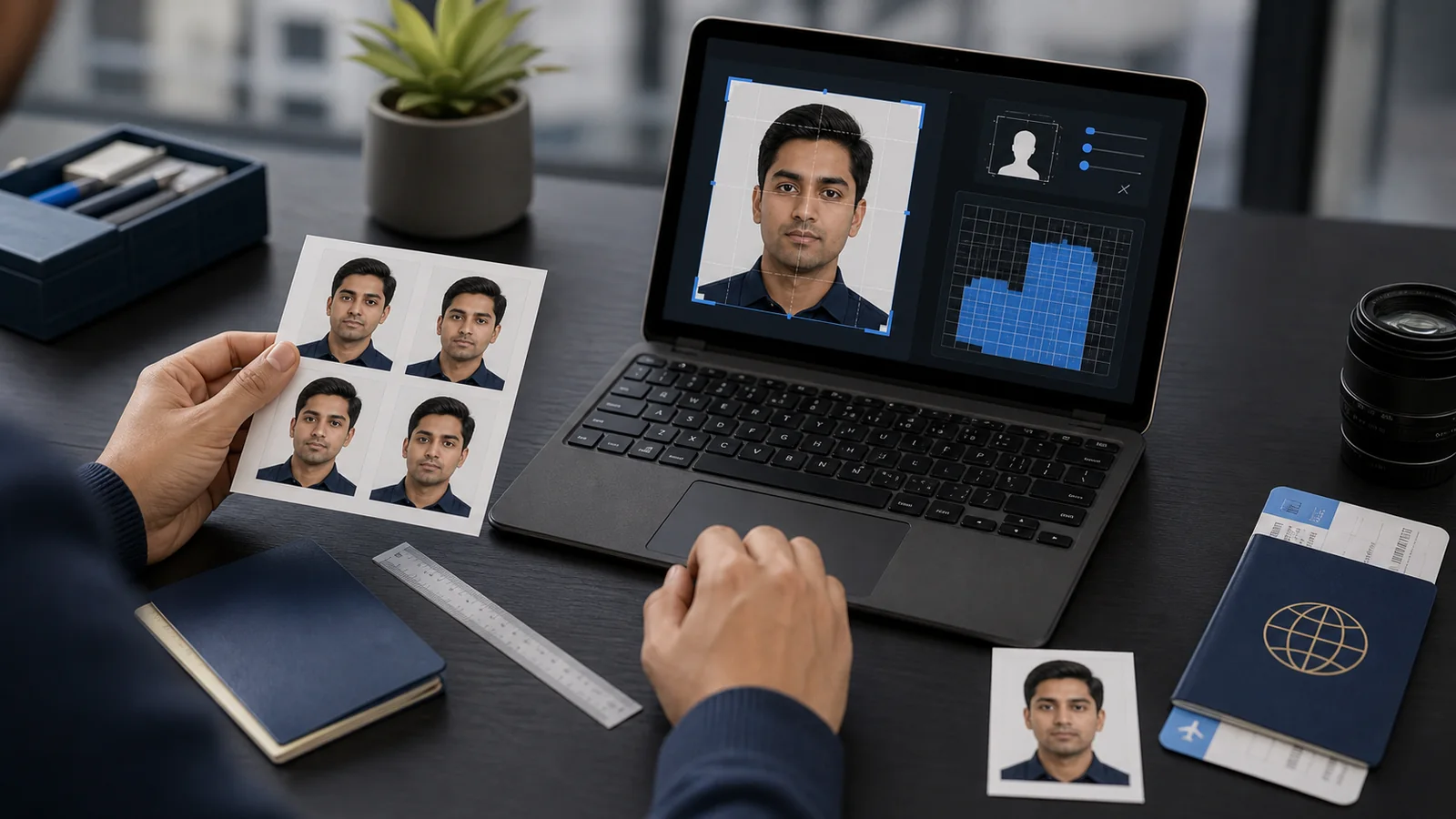
If you searched for Philippines passport photo size or DFA passport photo, the working format is 35 x 45 mm with a plain white background. The DFA usually captures the passport photo on-site, but the size and appearance rules still matter because they affect how you prepare for the appointment.
This is especially useful for Philippine consular applications abroad and for other documents that ask for a passport-size photo matching DFA expectations, even when the photo is not taken at the DFA counter itself.
A surprisingly common question is whether bangs are allowed in a Philippine passport photo. The safest rule is simple: hair cannot interfere with the DFA capture. If bangs cover the eyes, eyebrows, or cast shadow on the face, fix the hair before the appointment even though the DFA usually takes the photo on-site.
Philippines passport photo checklist
- Use the DFA standard: 35 x 45 mm with a plain white background when you need a self-supplied passport-style photo.
- Prepare for on-site capture: most DFA offices take the passport photo during the appointment, so appearance still matters even when you do not bring a print.
- Follow the dress code: wear clothing with a collar or sleeves and avoid white tops that blend into the background.
- Fix your hair before capture: bangs are only safe when they do not cover the eyes or eyebrows and do not cast shadow on the face.
- Remove glasses: the DFA does not allow eyewear in passport capture.
- Check the consular route separately: Philippine embassies and consulates abroad may still ask you to bring your own compliant photo.
That checklist is the most useful answer to searches like Philippines passport photo size and Philippine passport photo requirements bangs. The size is only part of the story. The real risk is turning up at the DFA in the wrong clothing or with hair that interferes with the capture.
Official Specifications
| Requirement | Value |
|---|---|
| Document | Passport |
| Size | 35 × 45 mm |
| Background | White |
The Philippine passport photo measures 35 mm wide by 45 mm tall. When the DFA captures your photo on-site, it is taken digitally and processed to meet these exact specifications. For applications at Philippine consulates abroad or for other documents, you may need to provide your own printed photos.
The face must be centred and occupy approximately 70–80% of the frame height. Both eyes must be at the same level, and the applicant must be looking directly at the camera.
| Specification | Requirement |
|---|---|
| Photo dimensions | 35 mm x 45 mm |
| Background | White |
| Expression | Neutral, mouth closed |
| Recency | Taken within last 6 months |
| Print quality | Photo paper, glossy or matte |
| Colour | Full colour, no filters |
Background Requirements
The DFA requires a plain white background for Philippine passport photos. When the photo is taken at a DFA office, the background is automatically white. For self-taken photos submitted at consulates or for other documents, you must ensure a pure white background.
If you are preparing your own file for a consular workflow, the passport photo background color guide is a useful companion. The Philippines belongs to the strict white-background side of the spectrum, not the light-grey or blue-grey exceptions seen in some European identity-photo systems.
The background must be uniform and free of any shadows, patterns, or objects. Shadows on the background or face are not acceptable.
- Plain white background required
- No shadows on the background or face
- No patterns, textures, or visible objects
- Background must be evenly lit
- Sufficient contrast between the subject and the background
Clothing and Appearance
The applicant must face the camera directly with a neutral expression. The mouth must be closed, and both eyes must be open and clearly visible. This applies whether the photo is taken on-site at a DFA office or prepared independently.
Glasses
The DFA does not allow glasses in Philippine passport photos. This includes all types of eyewear: prescription glasses, sunglasses, and tinted lenses. You will be asked to remove your glasses before the photo is taken at a DFA office.
Clothing and Dress Code
The DFA has a dress code for passport appointments. Applicants must wear clothing with collars or sleeves. Sleeveless tops, tank tops, tube tops, and spaghetti straps are not allowed. This is a common cause of issues at DFA offices, where applicants may be turned away for non-compliance.
Wear dark or coloured clothing that contrasts with the white background. White tops should be avoided as they blend into the background.
Hair and bangs
The DFA does not want hair to interfere with a clear frontal capture. Bangs are not automatically forbidden, but they become a problem if they cover the eyes, eyebrows, or cast a shadow across the forehead. If your fringe sits low, clip it back before the photo is taken.
Head Coverings
Head coverings are permitted for religious reasons only. The full face from chin to forehead must be clearly visible. The DFA may request documentation to verify the religious nature of the head covering.
Jewellery and Accessories
Small, non-reflective jewellery is acceptable. Large earrings, facial piercings, or accessories that could obscure facial features or cause glare should be removed.
DFA Dress Code Reminder
The DFA’s clothing requirement (collars or sleeves) is strictly enforced. Many applicants are turned away at DFA offices for wearing sleeveless tops. Bring a collared shirt or a cardigan to your appointment as a precaution.
How to Make It with Passlens
While the DFA takes your photo on-site for domestic applications, Passlens is invaluable for consular applications abroad, visa photos, and other Philippine documents that require the same specifications.
- Open Passlens and select the Philippines Passport preset.
- Remove your glasses. Wear a collared or sleeved top in a dark colour.
- Take a photo with even, frontal lighting, or upload a recent image.
- Passlens will apply a white background, detect your face, and crop to the correct 35x45 mm dimensions.
- Review the photo. Ensure your expression is neutral, the background is pure white, and your clothing is appropriate.
- Download for digital submission or print on photo paper for consular applications.
Where to Submit
Philippine passport applications require an in-person visit for biometric data capture (photo, fingerprints, and signature).
Within the Philippines
Apply at any DFA consular office or satellite office. Appointments are mandatory and must be booked through the DFA’s online appointment system at passport.gov.ph. Walk-in applications are generally not accepted except for urgent cases. The DFA captures your photo on-site. Standard processing takes 12 to 15 business days for regular processing, or 7 business days for express processing (additional fee).
Outside the Philippines
Filipino citizens abroad should apply at the nearest Philippine Embassy or Consulate General. Many consulates have adopted the DFA online appointment system. Processing times vary but are generally 6 to 8 weeks. Some consulates may require applicants to bring their own passport-size photos.
That domestic-versus-consular split is why many people get confused about DFA photo rules. Inside the Philippines, the DFA usually handles the passport capture itself. Outside the country, you are more likely to face a workflow where you must arrive with a compliant self-supplied photo that still follows the same biometric expectations.
Courtesy Lane
The DFA offers a courtesy lane for senior citizens (60+), persons with disabilities, pregnant women, solo parents with children, and OFWs with urgent travel needs. This lane provides faster processing but the same photo requirements apply.
Common Mistakes
While the DFA handles the photo on-site for most applications, there are still common issues that cause problems during your appointment:
- Wearing sleeveless clothing: The DFA’s dress code requires collars or sleeves. This is the number one reason applicants are turned away at the door.
- Wearing glasses: You will be asked to remove all eyewear. Be prepared to remove glasses before the photo is taken.
- Heavy makeup or filters: If you are providing your own photo (e.g., for consular applications), do not apply heavy makeup or digital filters.
- Wearing white clothing: White tops blend with the white background and are discouraged.
- Hair covering face: Hair that falls across the eyes, eyebrows, or cheeks will need to be pushed back.
- Non-neutral expression: Smiling, frowning, or any expression other than neutral will require a retake.
- Coloured contact lenses: Contacts that change the natural eye colour are not permitted.
Frequently Asked Questions
Do I need to bring my own photo to a DFA passport appointment?
No. For appointments at DFA offices within the Philippines, the photo is taken on-site using the DFA’s own equipment. You do not need to bring printed photos. However, for applications at Philippine consulates abroad, you may be required to bring your own compliant photos.
Can I wear a barong tagalog for my Philippine passport photo?
Yes. A barong tagalog is a collared garment and fully complies with the DFA dress code. However, if it is white or very light-coloured, it may blend with the white background. Consider wearing a darker-coloured barong for better contrast.
Why does the DFA have a dress code for passport photos?
The DFA requires clothing with collars or sleeves to ensure a professional and standardised appearance in passport photos. This policy has been in place for many years and applies equally to all applicants. The DFA has stated that the rule helps maintain the integrity and dignity of the Philippine passport.
Can I use my Philippine passport photo for a US visa application?
No. The US visa photo has different specifications (2x2 inches or 51x51 mm, square format) compared to the Philippine passport photo (35x45 mm, rectangular format). You will need a separate photo for US visa applications. Passlens offers presets for both formats.
What if my child is too young to sit still for the on-site photo?
DFA staff are experienced with photographing young children and infants. The parent may hold the child just outside the frame. If the child is very young, slight allowances are made for eye openness and expression. It helps to bring the child when they are calm and well-rested.
Can I have bangs in my Philippine passport photo?
Yes, but only if the bangs do not cover the eyes or eyebrows and do not create shadow on the face. If the fringe drops into the eye area or makes the photo look uneven, it is safer to pin it back before the DFA capture or before you prepare a consular photo.
Do I still need to follow the photo rules if the DFA takes the picture on-site?
Yes. The on-site capture does not remove the dress code, hair, glasses, or neutral-expression requirements. It only means the DFA controls the final camera and background. You still need to show up ready for a compliant biometric photo.